

Spring marks a critical turning point in ant activity. As temperatures rise and environmental conditions improve, ant colonies transition from survival mode into rapid expansion. What may begin as a few scattered ants can quickly develop into a widespread ant infestation within weeks. This sudden increase often catches property owners off guard, especially when activity appears to escalate overnight.
From an expert perspective, this growth is not random. It follows a predictable biological pattern driven by climate, food availability, and colony structure. Understanding how and why ants expand during spring is essential for controlling their spread before it becomes more difficult to manage.
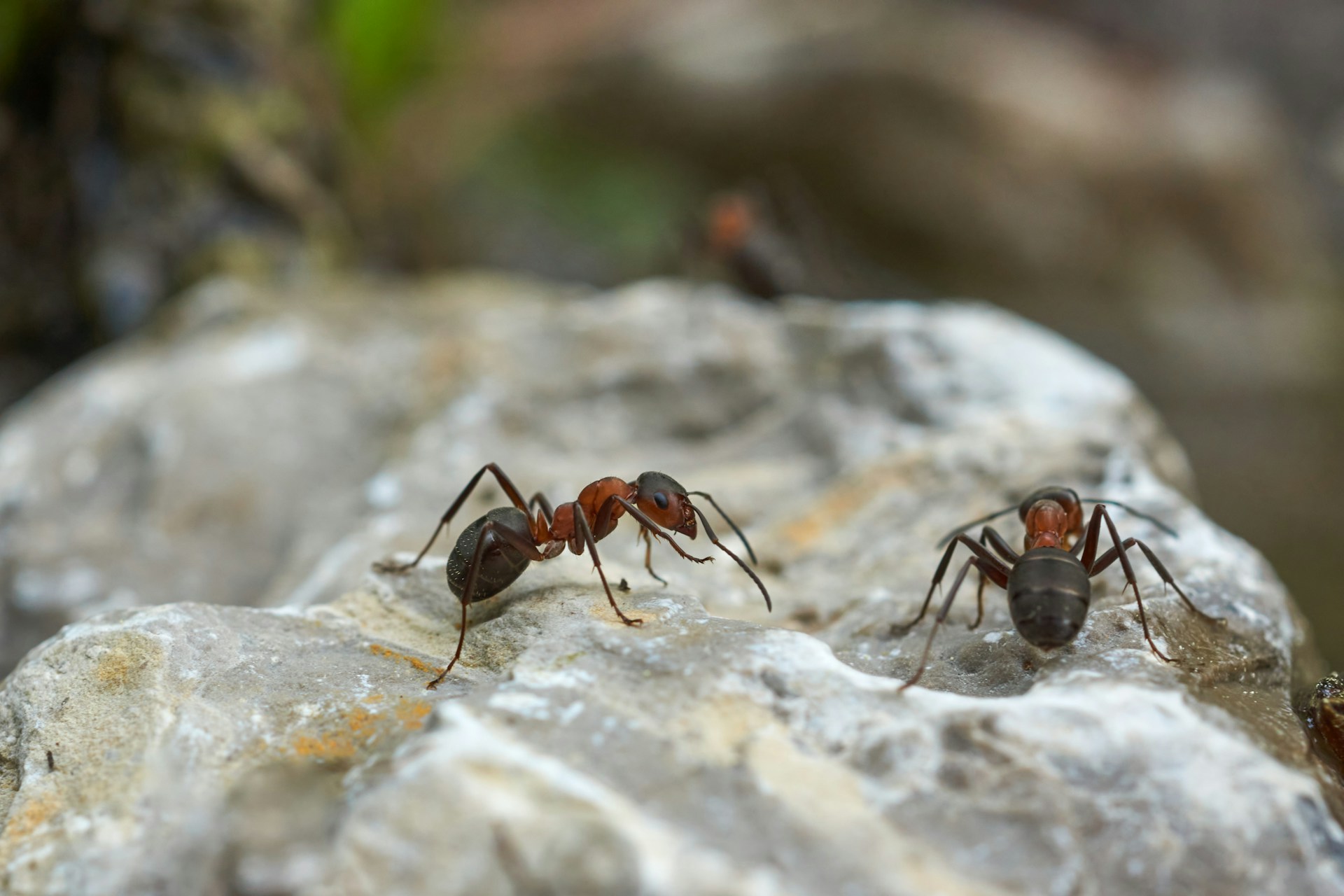
Why Spring Triggers Rapid Colony Growth
Ant colonies are highly responsive to seasonal changes. During colder months, activity slows significantly, but the colony itself remains intact. Once spring arrives, conditions shift in favor of growth and expansion.
- Warmer temperatures. Increase metabolic activity and support faster movement
- Moisture availability. Spring rains provide essential hydration for colony development
- Abundant food sources. New plant growth and organic matter support foraging
- Extended daylight. Longer days encourage increased activity cycles
- Colony recovery. Ants rebuild strength after winter dormancy
These factors create an environment where colonies can grow quickly and efficiently. The queen increases egg production, and worker ants become more active in securing resources. This coordinated effort leads to rapid population increases that can escalate into a full ant infestation if not addressed early.
How Ant Colonies Expand and Spread
Ant colonies do not rely on a single location. As they grow, they expand outward, creating new pathways and establishing additional nesting sites. This process allows them to cover more territory and access more resources.
- Colony splitting. Large colonies divide to form new nests nearby
- Trail formation. Worker ants create consistent paths to food sources
- Satellite nests. Secondary colonies develop closer to food and water
- Indoor migration. Ants move inside when conditions are more stable
- Resource tracking. Colonies adjust their location based on availability
This expansion strategy makes ants particularly difficult to control. Eliminating visible ants does not address the larger network of nests and trails that support the colony. Without targeting the entire system, activity often returns.
Understanding how ants interact with their environment is important for effective control. In our recent article on garden pest prevention, the relationship between outdoor conditions and pest activity is explored further.
Common Ant Species and Their Behavior in Spring
Different ant species exhibit unique behaviors, but many follow similar patterns during spring. Recognizing these differences helps determine how infestations develop and spread.
- Odorous house ants. Often invade kitchens in search of food and moisture
- Carpenter ants. Nest in wood and may contribute to structural concerns
- Pavement ants. Build colonies under concrete and near foundations
- Fire ants. Create outdoor mounds and defend territory aggressively
- Argentine ants. Form large colonies with multiple queens
Each species responds differently to environmental conditions, but all are driven by the same goal of expansion. This diversity makes ant infestation management more complex, as a single approach may not address every species effectively.
Why Ant Infestations Escalate So Quickly Indoors
Indoor environments provide ants with stability and consistent access to resources. Once a colony identifies a reliable food source, it establishes a steady flow of activity that can grow rapidly.
- Reliable food supply. Kitchens and storage areas offer consistent nourishment
- Controlled climate. Indoor temperatures remain stable compared to outdoor conditions
- Hidden nesting areas. Walls, cabinets, and flooring provide shelter
- Limited disturbance. Indoor spaces often allow colonies to grow unnoticed
- Moisture sources. Plumbing and appliances create ideal conditions
These factors make indoor spaces highly attractive to ants during spring. Once established, colonies can expand quickly, increasing the difficulty of control.
For businesses, this challenge becomes even more critical. In our blog post on warehouse pest strategies, the importance of structured pest management in high-risk environments is discussed in more detail.
How Professional Pest Control Manages Rapid Ant Growth
Managing a growing ant infestation requires more than surface-level treatment. Professional pest control focuses on identifying the source of the problem and disrupting the colony’s ability to expand.
The process begins with a detailed inspection to locate nesting sites, trails, and entry points. This step is essential for understanding how the colony is structured and where it is most active.
Targeted treatments are then applied to address both visible ants and hidden colonies. These treatments are designed to reach the source rather than just the surface, ensuring that the entire system is affected.
Another key component is prevention. By addressing conditions that attract ants, such as food sources and moisture, professionals reduce the likelihood of future activity. This combination of elimination and prevention creates a more stable environment.
Ongoing monitoring also plays an important role. Ant activity can change quickly during spring, and regular assessments ensure that any new developments are addressed before they escalate.
Without this structured approach, controlling an ant infestation becomes significantly more difficult. Temporary solutions may reduce activity briefly, but they do not prevent the colony from continuing to grow.
Where Early Action Stops Rapid Expansion
Ant colonies move quickly during spring, but early and informed action can prevent small problems from becoming widespread infestations. Understanding how colonies expand is the first step toward effective control.
For reliable pest control and long-term solutions, contact E&G Exterminators and take the next step toward a more controlled and protected environment.