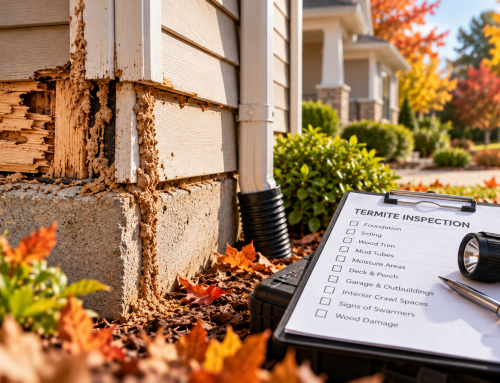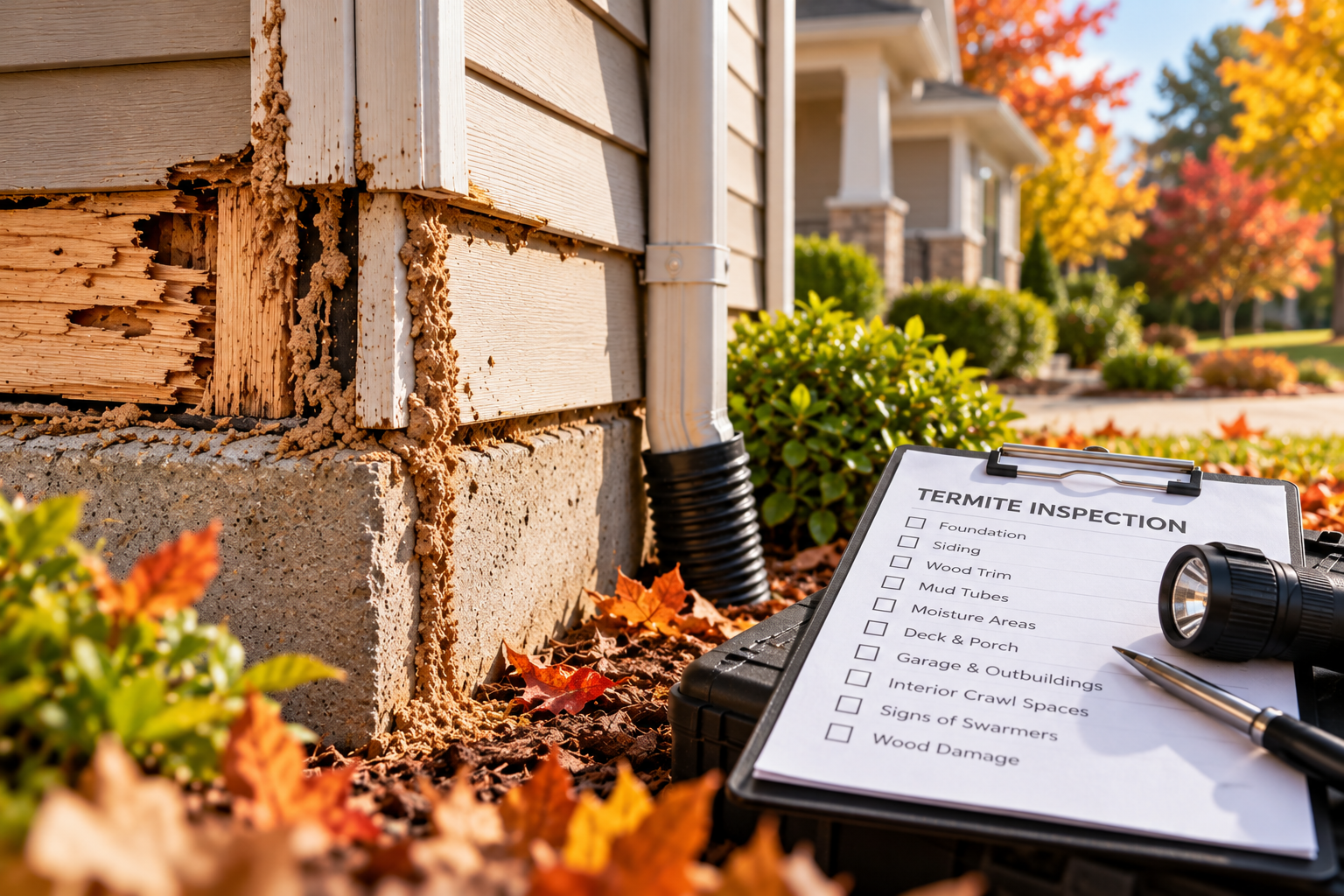


Termites can remain active inside a New Jersey home long before obvious damage appears. Eastern subterranean termites live in soil and travel through protected routes to reach wood, paper, and other cellulose-based materials.
Early recognition is valuable because termite control works best when inspection begins before weakened flooring, damaged trim, or major structural changes become visible. This broader evaluation helps distinguish termites from ants, water damage, decay, and other conditions requiring different responses.
Mud Tubes Can Reveal Protected Travel Routes
Subterranean termites build mud tubes to maintain moisture while moving between soil and structural wood. These narrow, earth-colored lines may appear on foundation walls, basement surfaces, crawl-space supports, garage slabs, utility penetrations, or other sheltered transitions.
Warning signs worth reporting include:
- Pencil-width tubes extending upward from soil or concrete joints
- Soil packed into foundation cracks, gaps, or wood connections
- Fresh sections added after an older tube has been disturbed
- Tubes hidden behind storage, insulation, shrubs, or attached structures
- Activity near damp foundation edges or wood-to-soil contact
Professional inspection follows the evidence beyond the visible tube and checks nearby wood, moisture, and access conditions before recommending treatment.
Swarmers And Shed Wings Often Appear Briefly
Winged reproductive termites, called swarmers, leave mature colonies when temperature and moisture conditions are favorable. New Jersey homeowners may find them near windows, doors, vents, basements, or interior lights.
The reason hidden termite damage can continue for years is that swarm evidence may last only a short time while the colony remains protected underground or inside structural areas. Indoor swarmers deserve particular attention because they may indicate a colony within or immediately beside the building.
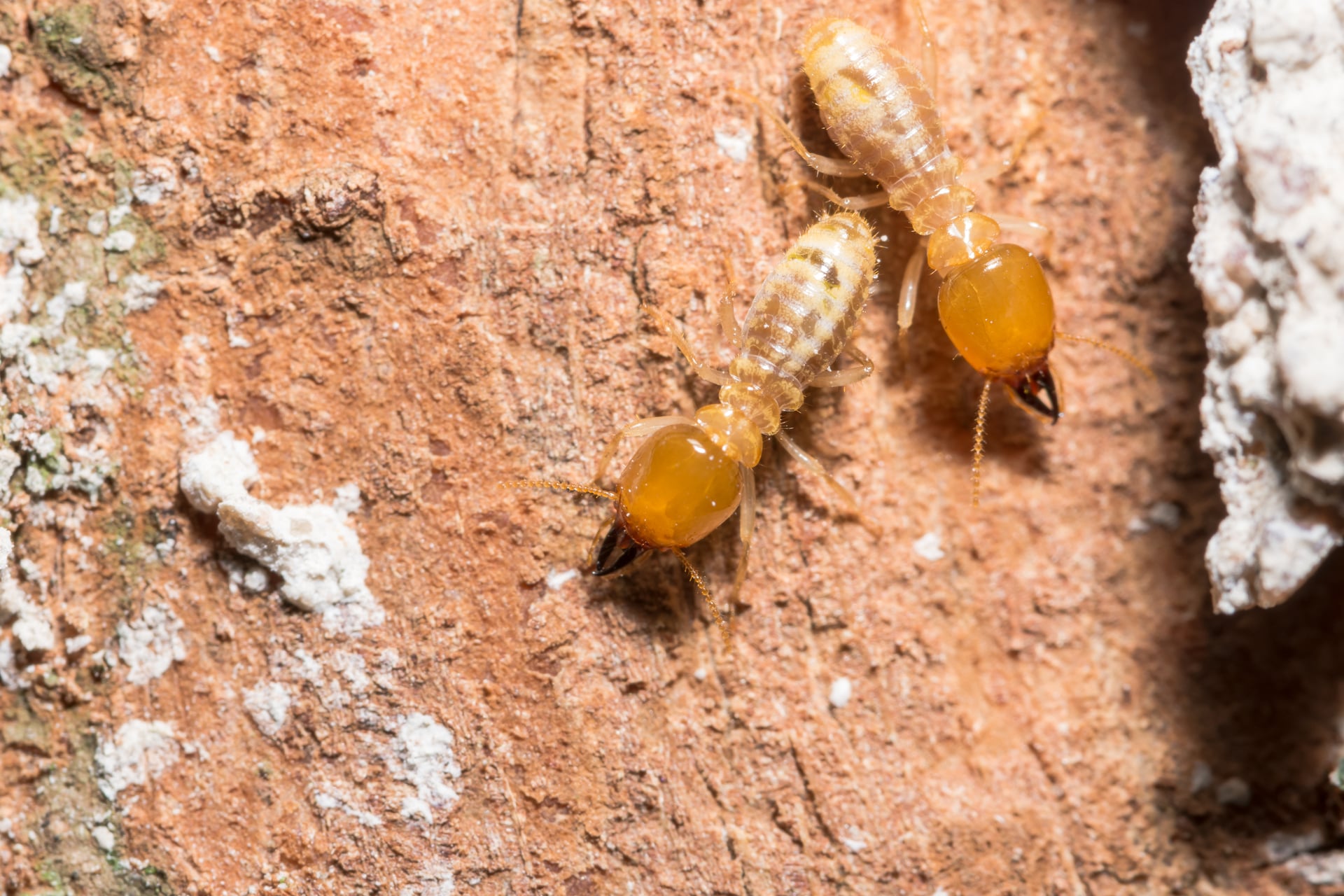
Termite swarmers can be mistaken for flying ants. Termites generally have straight antennae, broad waists, and four wings of similar length. A trained technician can confirm identification and determine whether the insects originated indoors or entered from an outside swarm.
Wood And Finished Surfaces May Change Gradually
Termites often feed inside wood while leaving a thin exterior shell intact. Damage can develop around framing, flooring, window trim, door frames, baseboards, sill plates, or other concealed structural materials.
Possible changes include:
- Wood that sounds hollow when lightly tapped
- Soft trim or flooring that gives under pressure
- Blistered, darkened, or uneven wooden surfaces
- Bubbling paint or wallpaper near damaged material
- Doors or windows becoming difficult to open without another clear cause
These symptoms can also result from moisture, settling, or wood decay. Surface appearance alone cannot establish the extent or age of termite activity. Professional termite control begins with confirming the pest and mapping where evidence connects through the structure.
Moisture Can Increase Risk Around Vulnerable Areas
Water does not create termites, but moisture can make parts of a property more favorable and weaken materials around potential entry routes. Plumbing leaks, irrigation overspray, clogged gutters, poor drainage, damp crawl spaces, and dense landscaping can support hidden conditions near wood and soil.
The connection between moisture and infestations explains why inspectors evaluate both pest evidence and the environment sustaining it. A damp basement corner or foundation bed may attract several handled pests, including ants, cockroaches, silverfish, millipedes, and termites, so accurate identification remains essential.
A termite inspection may review:
- Leaking plumbing near bathrooms, kitchens, and utility rooms
- Irrigation repeatedly wetting foundations, siding, or wooden posts
- Mulch, firewood, or landscape timbers placed against the home
- Crawl-space ventilation, drainage, and damp structural materials
- Gutters and downspouts releasing water near foundation edges
Correcting moisture supports prevention, but it does not eliminate an established colony. Confirmed activity still requires a property-specific treatment plan and appropriate follow-up.
Professional Inspection Connects Every Early Clue
Early termite signs are most useful when they are evaluated as part of the full property. One tube, a handful of wings, or a soft section of trim may be connected to activity extending beyond the visible area. Inspectors consider foundation design, construction type, moisture, landscaping, inaccessible spaces, previous treatment, and the location of each clue.
A professional plan may include targeted termite treatment, soil applications, monitoring systems, structural recommendations, and scheduled follow-up. The method should reflect the confirmed species, entry route, infestation extent, and building conditions rather than relying on a one-size-fits-all response.
Homeowners should avoid removing damaged wood, sealing tubes, or covering evidence before inspection. Those details can help technicians determine where termites are traveling and which areas need closer evaluation. Early professional attention can also separate active infestation from old damage, helping property owners avoid unnecessary work while focusing resources where protection is needed.
New Jersey homes remain vulnerable wherever soil, wood, shelter, and moisture overlap. Recognizing subtle evidence and arranging a detailed inspection gives termite control the strongest starting point before concealed feeding becomes a larger repair concern.
Let Small Signs Lead To Clear Answers
Contact E&G Exterminators for professional inspections, targeted termite control, moisture-focused prevention, and dependable follow-up.